

Compression T-Shirt Size: The size guide to make sure you get it right
For a compression shirt, take your usual size for a fitted garment, primarily based on your chest circumference and height. The fit should be snug but never painful: the fabric should hug your torso, stay in place during exercise, and not restrict breathing. If you are between two sizes, choose the smaller one if you are lean and muscular, and the larger one if you are looking for abdominal comfort during long sessions.
My name is Félix, founder of Hustle Fightwear and a competitive BJJ, grappling, and MMA practitioner. I've tested a good dozen compression shirt brands—from mainstream ranges to professional gear. This guide tells you everything you need to know to choose your size without making a mistake.
What is a compression shirt for (and how it should fit)
A compression shirt is not a classic t-shirt. It is a technical garment designed to exert measured pressure on the torso, shoulders, and arms during exercise.
- Muscle support during exercise — reduction of micro-vibrations, delayed muscle fatigue
- Sweat wicking to the outside of the fabric (polyester-elastane, no cotton)
- Improved post-exercise recovery if worn under a rashguard or as a base layer
For these effects to work, the fit must be snug. A loose compression shirt no longer compresses anything. Conversely, a shirt that is too tight restricts your breathing and quickly becomes uncomfortable.
The golden rule: the shirt should cling to the body without creasing, the seams should fall precisely on the shoulders, and you should be able to raise your arms above your head without the bottom of the shirt riding up.
How to take your measurements before ordering
Before looking at any size chart, take two reliable measurements.
Chest circumference. Place a tape measure horizontally, under the armpits, at the widest part of the torso. Breathe normally. Note the number in centimeters.
Height (standing height). Measure yourself barefoot against a wall, with a straight back. This figure is important for the length of the shirt.
Weight (indicative). Useful complement to decide in borderline cases, not a primary criterion.
Measure yourself preferably in the morning, standing, and use a real flexible tape measure.
The Hustle Fightwear compression shirt size guide
| Size | Chest Circumference | Height | Indicative Weight |
|---|---|---|---|
| XS | 84 – 88 cm | 1.60 – 1.68 m | 55 – 62 kg |
| S | 88 – 94 cm | 1.65 – 1.73 m | 62 – 70 kg |
| M | 94 – 100 cm | 1.70 – 1.80 m | 70 – 80 kg |
| L | 100 – 106 cm | 1.78 – 1.88 m | 80 – 90 kg |
| XL | 106 – 112 cm | 1.85 – 1.93 m | 90 – 100 kg |
| 2XL | 112 – 118 cm | 1.88 – 1.98 m | 100 – 110 kg |
Chest circumference remains the priority measurement. If your chest says M but your weight says L, trust your chest circumference.
To discover our range, go to the Hustle Fightwear compression shirts page.
The most common sizing mistakes
1. Sizing up for safety. A compression shirt that is too large floats on the torso, no longer compresses anything, and loses all its technical function.
2. Relying solely on your usual size. A mainstream M is not a compression M. Always refer to the manufacturer's chart — it's the same logic as choosing your rashguard size.
3. Ignoring torso length. If you are tall with a long torso, the shirt may be good in width but too short vertically.
4. Choosing by feel without measuring. Two minutes of measuring is the bare minimum to avoid a postal round trip.
Between two sizes: how to decide
If you are lean and muscular, take the smaller size. If you have a larger build, take the larger size. If you are completely unsure, opt for the larger size.
Last tip: if you wear your compression shirt as a base layer under a rashguard, take it slightly tighter. If you wear it alone for physical training, you can allow for more comfort.
How to wear a compression shirt depending on the sport
Physical preparation: classic snug fit. Combat sports as a base layer: slightly tighter fit. Running and trail running: snug fit with attention to length. Post-exercise recovery: comfortable but still compressive fit.
Frequently asked questions
Does a compression shirt stretch out in the wash?
Not if you wash it correctly. At 30°C on a delicate cycle and air-dried, a polyester-elastane shirt retains its original compression. What kills a compression shirt is the dryer and temperatures above 40°C.
Should a compression shirt feel painful on the first try-on?
No. A well-fitting compression shirt is tight, but you should be able to breathe normally and raise your arms without restriction.
Can you wear a compression shirt all day?
Yes, as long as the fit is good. Just avoid sleeping in it. To know more precisely how long to keep a compression shirt depending on its use, we have a dedicated guide.
Should I size up if I'm muscular?
No, on the contrary. Trust your actual chest circumference measured with a tape measure. The stretch fabric adapts to muscle volume.
You know your size — take action
Discover the Hustle Fightwear Rashguard collection: competition-tested compression fit, polyester-elastane fabric that retains its shape wash after wash, precise size chart to avoid mistakes.
Read more

Discover the Brazil rashguard from the Nation Drop Hustle Fightwear collection: a technical tribute to the historical birthplace of Brazilian Jiu-Jitsu.
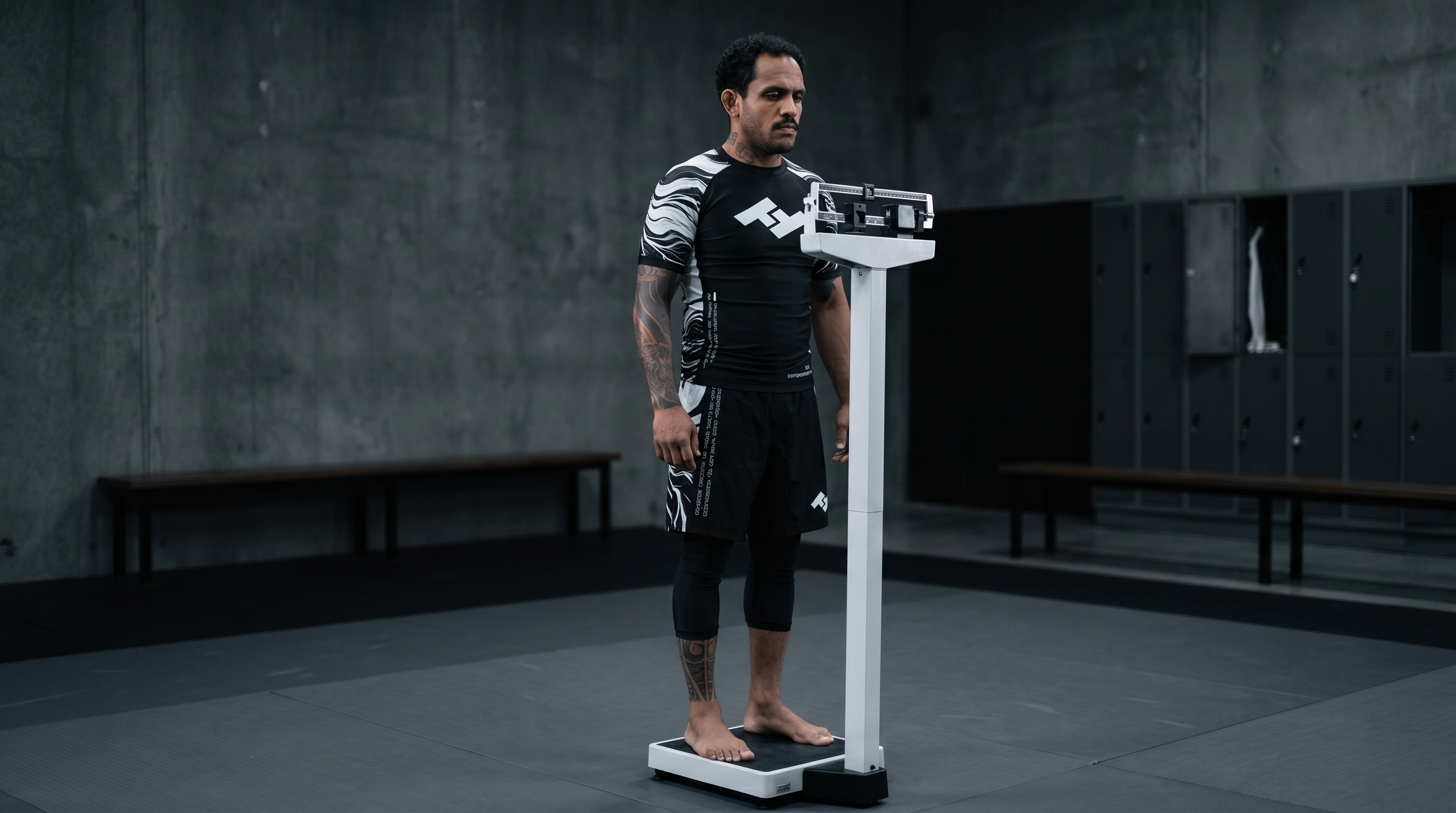
Catégories CFJJB, IBJJF, ADCC et MMA amateur en France. Gi ou no-gi à la pesée, semaine J-7, protocole jour J. Guide complet par Hustle Fightwear.