

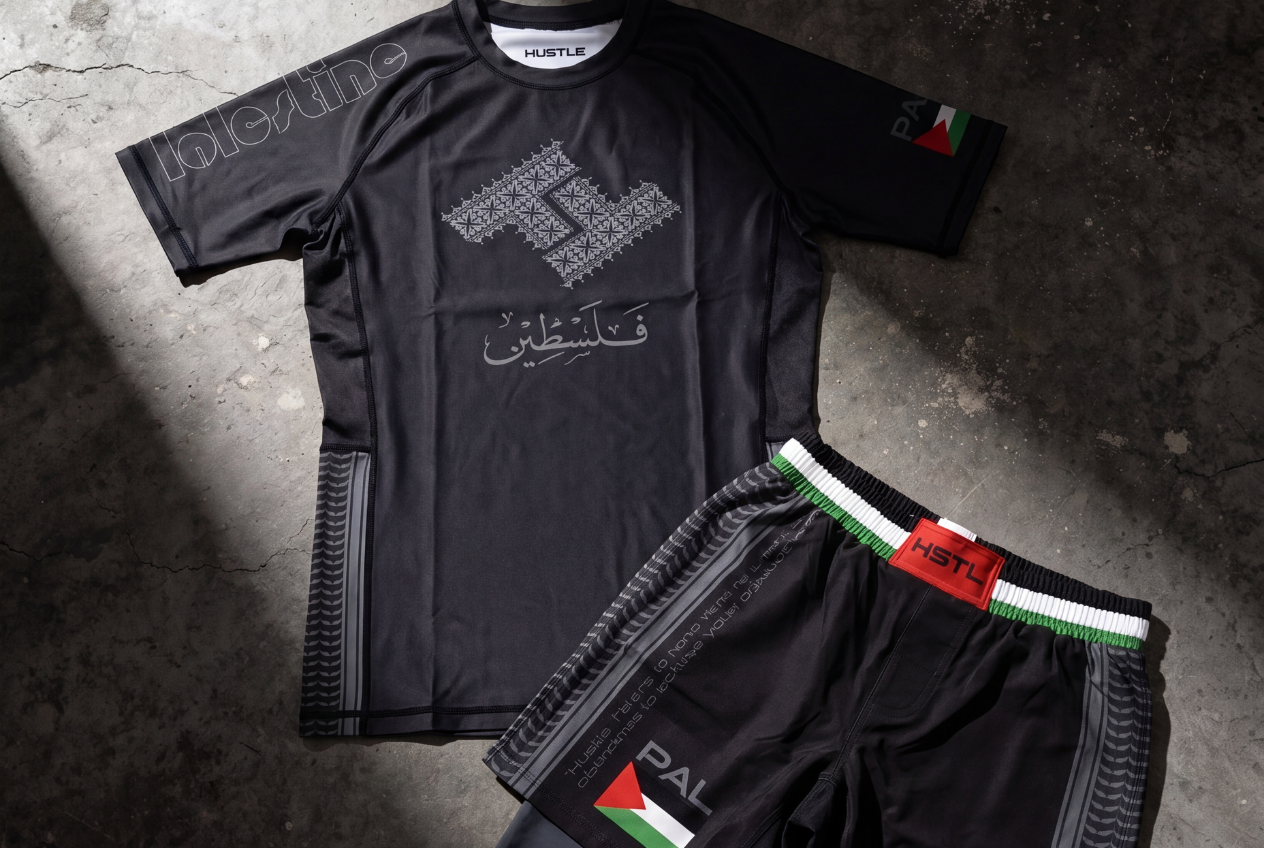



How to wash a compression t-shirt without damaging it?
A good compression shirt is an investment. At 25 to 60 euros a piece, you want it to last. The problem is that 80% of users wash it incorrectly and destroy its fibers in a few weeks: a shirt that loses its shape, smells bad despite washing, and loses its compression. At Hustle Fightwear, we design technical shirts for sports and combat, and we constantly see the same mistakes. Here's the complete method for washing your compression shirt without damaging it.
Why compression shirts are delicate when washed
Unlike a cotton t-shirt, a compression shirt is a technical fabric made of polyester and elastane (often 80/20 or 85/15). These synthetic fibers have a peculiarity: they don't like heat, aggressive products, or excessive friction. A single machine wash that is too hot can cause the garment to lose 30% of its elasticity. Fabric softener clogs the micro-pores that wick away sweat. Tumble drying melts the elastane. The result: your shirt, which was perfect new, no longer holds its shape, no longer compresses, and smells bad as soon as you sweat.
The ideal temperature: 30°C maximum
This is the number one rule. A compression shirt should be washed cold or at a maximum of 30°C. Beyond that, the elastane fibers begin to degrade. At 40°C, you accelerate the loss of elasticity. At 60°C, you destroy it permanently in a few washes. Many people wash hot thinking it disinfects better — this is false, the temperature does not kill odor-causing bacteria, it mainly damages the fabric. The correct method: "delicate" or "synthetics" program at 30°C, gentle spin (800 rpm maximum).
Which detergent to use (and which to absolutely avoid)
Use a mild liquid detergent, preferably without fragrance or optical brighteners. Powder detergents contain abrasive agents that embed themselves in technical fibers and damage them in the long run. The number one mistake: fabric softener. Never, ever use fabric softener on technical clothing. Fabric softener leaves a greasy film on the fibers that clogs the sweat-wicking pores. The result: your shirt no longer wicks anything away, it becomes a reservoir for bacteria, and that's where odors appear. A good sports detergent without fabric softener, or a reduced dose of classic detergent, is more than enough. For your information, the same rules apply to rashguards — you can also check out our guide on how to wash a rashguard, the method is almost identical.
Turn your t-shirt inside out before putting it in the washing machine
This is a simple reflex that 90% of people forget: turn your t-shirt inside out before washing. Why? Because the inside of the garment is where sweat, bacteria, and dead skin cells accumulate. By turning it inside out, you directly expose the dirty area to the wash cycle. In addition, it protects the prints and logos on the outside, and it limits friction on the seams. It's an extra 3 seconds, but it doubles the lifespan of your t-shirt.
Drying: air dry, never tumble dry
This is where many make a fatal mistake. No tumble dryer, ever. The heat of the tumble dryer melts the elastane and permanently destroys compression. A single cycle can be enough to ruin a new t-shirt. Instead, air dry, on a hanger or flat. Technical fabrics dry very quickly naturally (1 to 2 hours), so you don't lose any time. Also avoid prolonged direct sunlight drying, which can fade prints and weaken fibers. A shaded, airy spot is perfect.
What to do if the t-shirt retains a bad odor?
This is the number one problem with compression shirts: even after washing, the smell returns as soon as you sweat. This is due to bacteria that have embedded themselves in the fibers. Two effective solutions: soak the t-shirt for 30 minutes in a basin of lukewarm water with a glass of white vinegar before washing — vinegar destroys bacteria without attacking the fabric; or add a spoonful of baking soda directly into the drum with the detergent. These two tricks reactivate the fabric's anti-odor capabilities. If nothing works, it means the t-shirt has been washed with fabric softener for too long: the pores are permanently clogged, and it needs to be replaced.
Washing frequency: after each session
No debate: a compression shirt should be washed after each use. Letting it air dry and then putting it on again the next day is a very bad idea: bacteria multiply, embed themselves in the fibers, and the smell becomes indelible in a few weeks. If you train 4-5 times a week, invest in 3 or 4 shirts for a clean rotation — this also prevents you from wearing out the same one. To choose the right size from the start, consult our guide what size to choose for a compression shirt.
Summary: the routine that extends the life of your t-shirt
Turn the t-shirt inside out, wash at a maximum of 30°C on a delicate program, use a liquid detergent without fabric softener, spin gently, air dry in the shade. Never tumble dry, never use fabric softener, never above 30°C. With this routine, a quality compression shirt can easily last 2 to 3 years of regular training. Discover our Hustle technical t-shirt collection designed for sports and combat, made to last if you care for them properly. Have a good session.
Read more

The rashguard is not a gadget in BJJ. Here are 7 concrete reasons — protection, hygiene, performance — why serious practitioners can no longer do without it.

Do you want to get into Brazilian Jiu-Jitsu but don't know where to start? Here's a complete guide to taking the plunge, from your first class to your first belt.