


How to Wear a Rashguard? Complete Guide for BJJ, MMA, and Grappling
A rashguard should be worn directly on the skin, tight to the body, with no t-shirt underneath. This is its function: to protect your skin against friction, mat burns, and skin infections during grappling, while remaining perfectly snug so as not to give your opponent any grip.
I'm Felix, founder of Hustle Fightwear and a BJJ and MMA competitor. I've worn rashguards in every possible context — no-gi, under the gi, in IBJJF competitions, in MMA sparring, and even in physical prep. Here's exactly how to wear it in every situation.
Rashguard directly on the skin: the basic rule
The rashguard is designed to be worn directly on the skin. Wearing a t-shirt underneath is a common mistake among beginners — it creates creases, excess fabric that provides grips in grappling, and negates the anti-friction effect of the rashguard.
The polyester-spandex fabric of the rashguard was specifically chosen to:
- Slide on the skin without irritation, even during long ground sessions
- Wick away sweat (unlike cotton which absorbs and gets heavy)
- Protect against infections — a physical barrier against bacteria, fungi, and mat herpes
The only exception: you can wear a compression t-shirt under your rashguard if you want a double layer of muscle support. In this case, choose the compression t-shirt one size down to avoid creases under the rashguard.
How to wear a rashguard in no-gi
This is the most common and simplest use. In no-gi (grappling without a kimono), the rashguard is your main upper body garment.
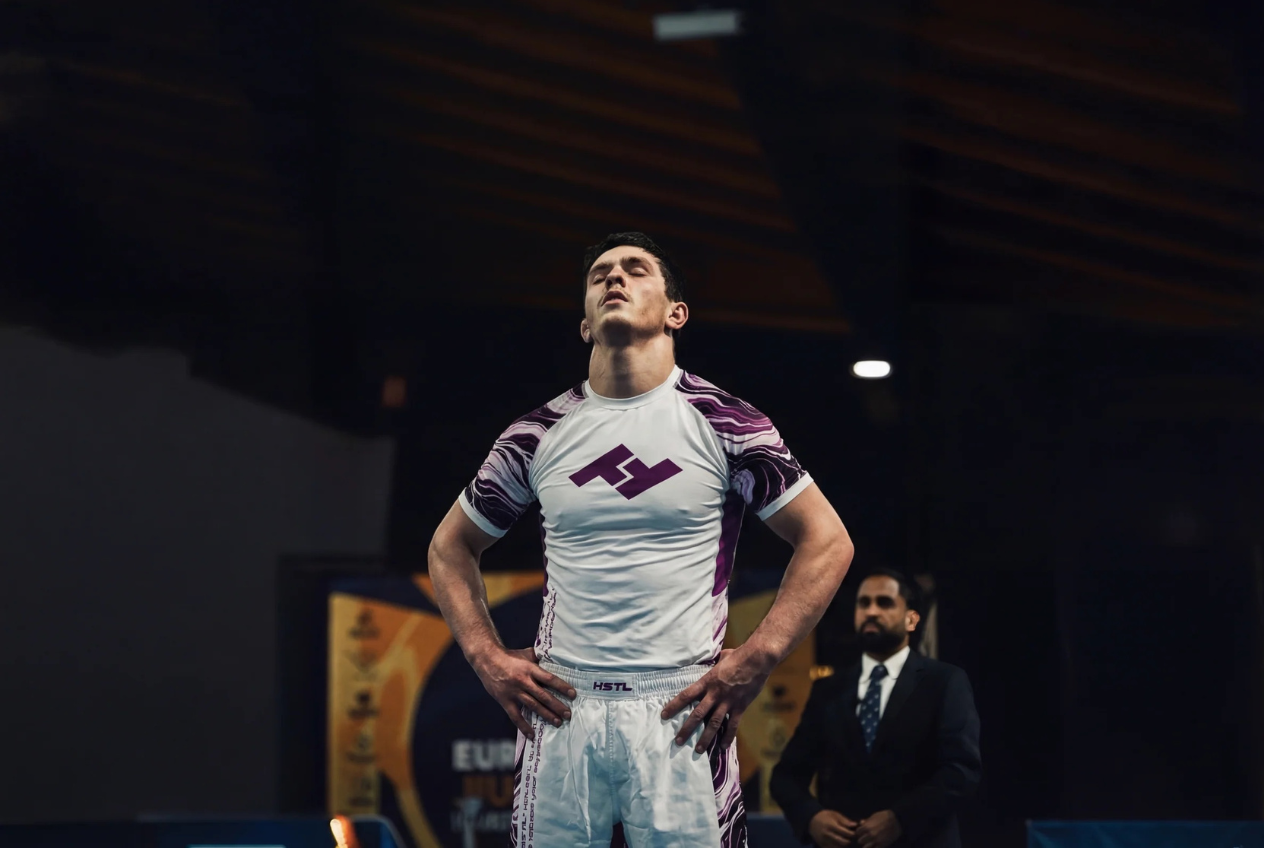
The fit must be ultra-tight. In no-gi, your opponent will try to grab you everywhere. An overly loose rashguard provides grips — this is a direct technical disadvantage. The rashguard must stick to the torso like a second skin, with no creases around the armpits, stomach, or lower back.
Long sleeves or short sleeves? In IBJJF no-gi competition, long-sleeve rashguards are mandatory. In training, it's a matter of preference — but long sleeves offer better protection against mat burns on the forearms.
The bottom: the rashguard is worn tucked into the grappling shorts to prevent it from riding up during rolls. Some practitioners use shorts with an internal silicone grip that keeps the rashguard in place.
How to wear a rashguard under the gi
In BJJ with a kimono, the rashguard replaces the t-shirt under the gi jacket. This has become standard even among practitioners who initially wore a cotton t-shirt.
Why wear a rashguard under the gi:
- Protection against gi collar friction (especially around the neck and collarbones)
- Much better sweat wicking than cotton
- Additional hygienic barrier when rolling with partners
- Better glide under the jacket — more freedom of movement
Long sleeves are mandatory under the gi. A short-sleeve rashguard under a gi jacket causes direct friction on the biceps and forearms. Always opt for long sleeves with the gi.
Fit under the gi: same rule as in no-gi — as tight as possible. A loose rashguard under the gi creates visible and uncomfortable fabric bulk. To choose your size correctly, consult our rashguard size guide.
How to wear a rashguard in MMA and sparring
In MMA, the rashguard is worn alone (no gi) with MMA shorts. The use is similar to no-gi with a few specifics:
Short sleeves often preferred in MMA sparring for freedom of movement in the shoulders during strikes. But in MMA grappling (clinch, takedowns, ground), long sleeves remain superior for protection.
The rashguard must withstand impacts. In MMA, you're not just rolling — you're taking hits. A quality rashguard with flatlock seams resists repeated friction and pulling without tearing.
Always tuck the rashguard into the shorts. During a takedown or scramble, a rashguard that comes out of the shorts will ride up to your chest. In competition, the referee may stop you to readjust it — in sparring, it's just annoying.
Mistakes to avoid
1. Wearing a rashguard that is too big. This is the most common mistake. A loose rashguard no longer protects against friction (the fabric moves on the skin), provides grips in grappling, and constantly rides up during exertion.
2. Wearing a cotton t-shirt underneath. Cotton absorbs sweat, weighs down the garment, creates creases, and negates the technical effect of the rashguard. If you want a base layer, use a compression t-shirt.
3. Not tucking it into the shorts. A rashguard that comes out of the shorts will ride up with the first ground movement. Make a habit of systematically tucking it in before each round.
4. Using fabric softener when washing. Fabric softener leaves a film on the fibers that reduces sweat wicking and accelerates fabric degradation. Wash your rashguard at 30°C without fabric softener, air dry.
Frequently Asked Questions
Can you wear a rashguard alone outside of sports?
Technically yes, but that's not its primary purpose. The rashguard is a technical sports garment. For daily compression wear, a compression t-shirt will be more suitable — same technology but a less sporty cut.
Long-sleeve or short-sleeve rashguard?
Long sleeves for BJJ (mandatory under the gi, recommended in no-gi), maximum protection against friction. Short sleeves for striking MMA, physical prep, or if you prefer freedom of movement in the shoulders.
Will my rashguard shrink in the wash?
Not if you follow the instructions: 30°C, no tumble dryer. A quality polyester-spandex rashguard will maintain its dimensions throughout its lifespan. If you're looking to adjust a rashguard that's too big, consult our guide on how to shrink a rashguard.
Should you wear a cup under the rashguard?
The cup is worn under the shorts, not under the rashguard. The rashguard only covers the upper body. In MMA and grappling, a cup is highly recommended but it is placed in a supporter or shorts with an integrated cup.
Your rashguard, your second skin
Discover the Hustle Fightwear Rashguard collection: flatlock seams, anti-friction polyester-spandex fabric, competition fit tested in BJJ and MMA. A rashguard that stays in place from the first to the last round.
Read more

How long to wear a compression shirt during exercise, daily, and for recovery. A practical guide from an MMA competitor.
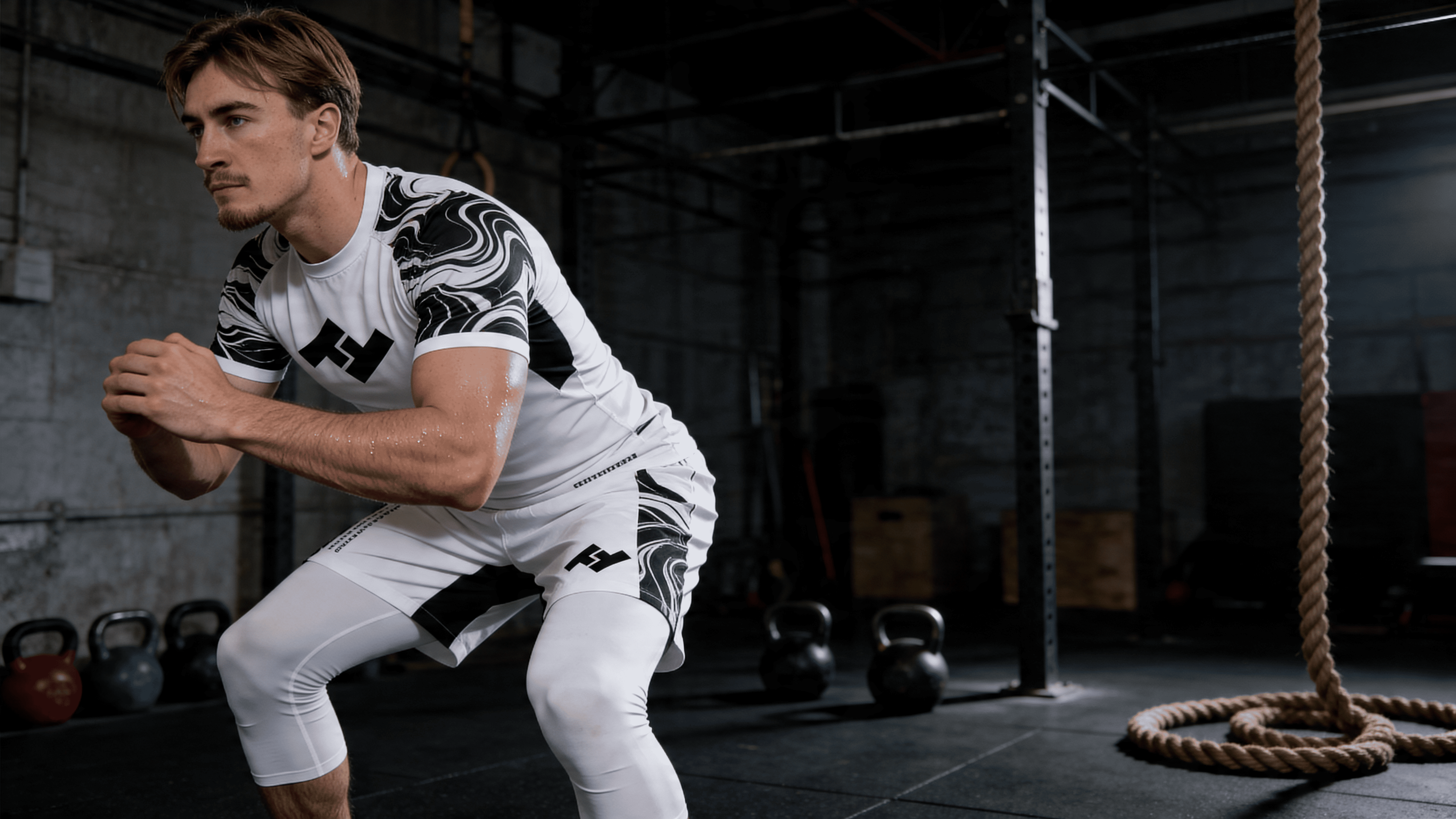
All the concrete benefits of the compression t-shirt for sport: muscle support, recovery and perspiration management.