

What size rash guard should I get? Complete guide
A rashguard that's too big and rides up with every guard pass. A rashguard that's too tight, compressing your rib cage and restricting your movements. In both cases, your training suffers. Choosing the right rashguard size before buying means avoiding ending up with a garment you no longer wear after two weeks. This BJJ rashguard size guide explains how to measure, compare, and choose your size without making a mistake—whether you're just starting out or looking for a new rashguard for sparring and competition.
Tight or loose rashguard — what compression to choose?
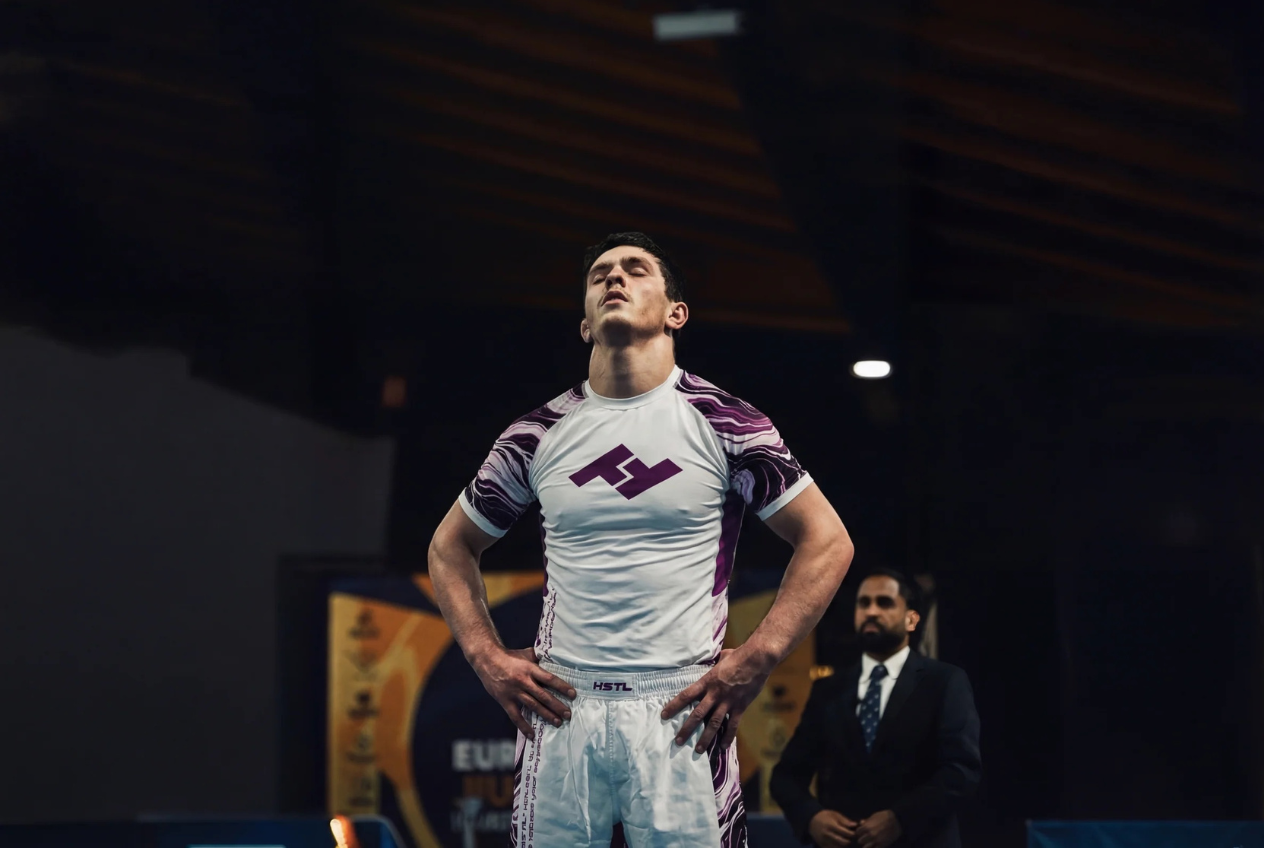
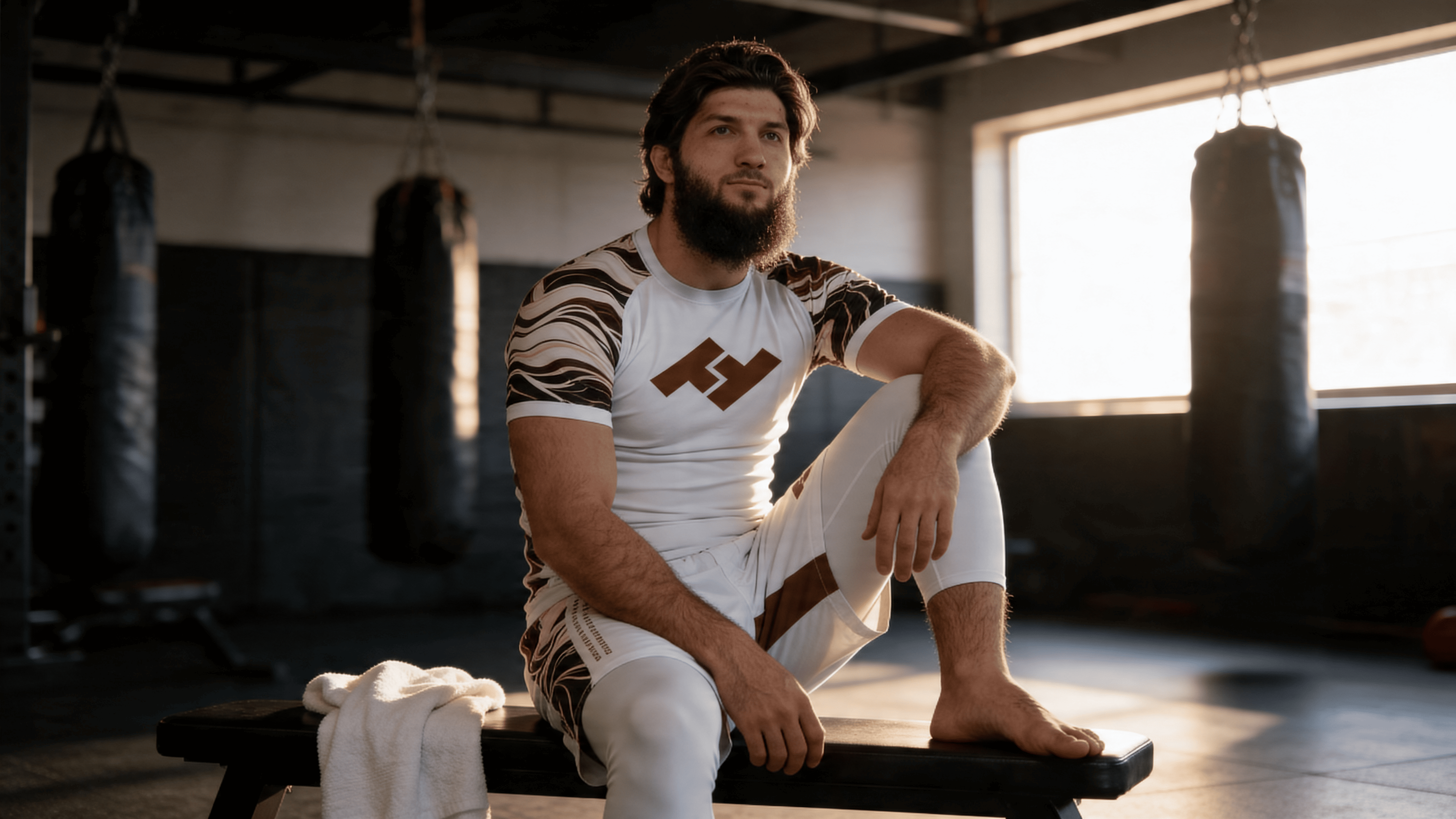
A rashguard is not a t-shirt. It's a compression garment designed to hug the body, stay in place during exercise, and protect the skin from friction on the mat. The right fit is a rashguard that sticks to the torso without restricting breathing or limiting shoulder mobility.
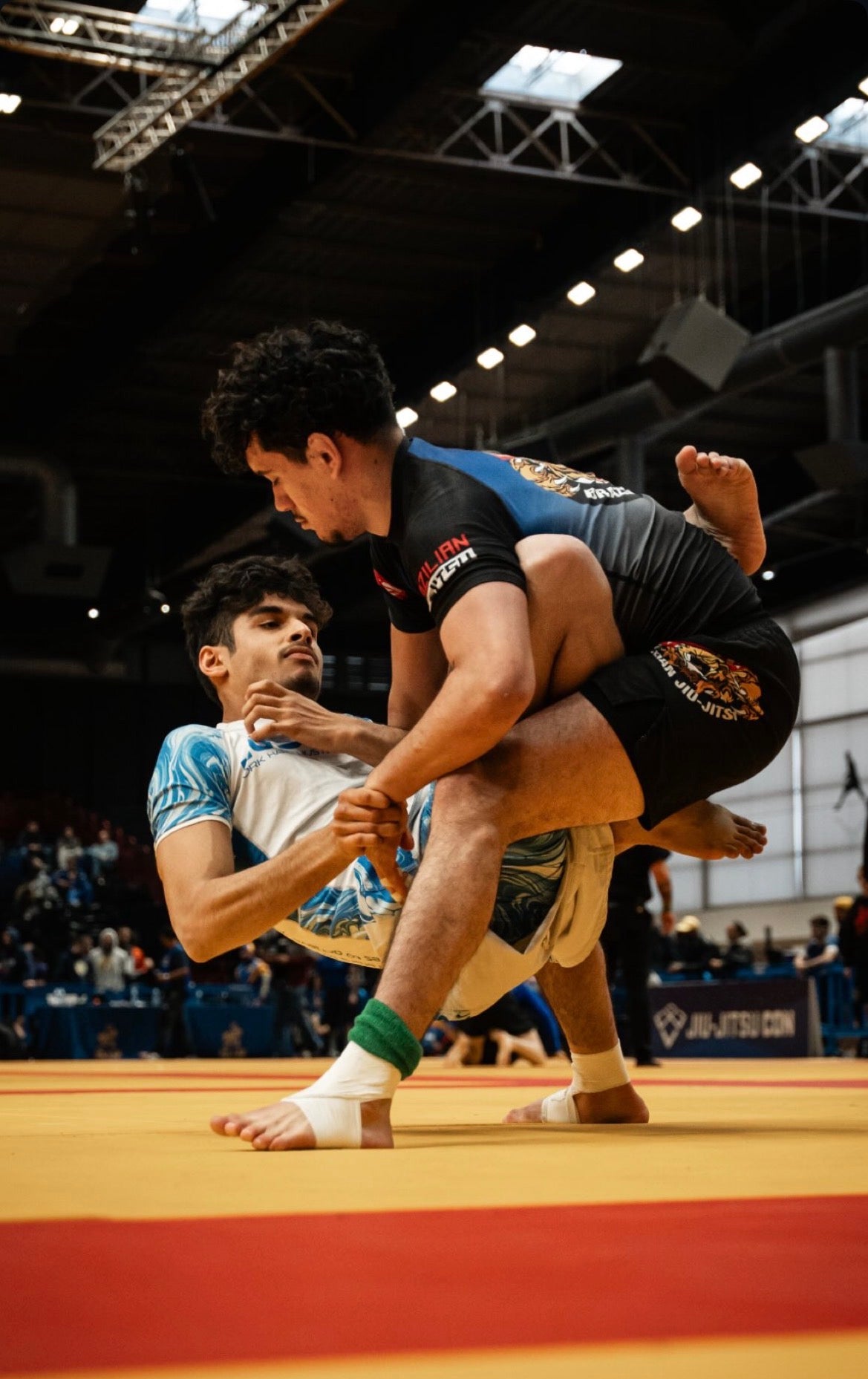
In competition, I've always preferred a slightly tight rashguard—it stays in place during guard passes and sweeps, without ever hindering mobility. A rashguard that's too loose rides up and creates unnecessary friction on the mat. This is a concrete problem that comes up with every sparring session when the fit isn't right.
The rule: it's better to be slightly snug than slightly loose. The polyester-elastane fabric loosens up by a few millimeters after the first few uses. A rashguard that seems "just right" when trying it on will be perfect after two or three training sessions.
How to take your measurements to choose your rashguard
Before looking at a size guide, take two reliable measurements. This is the only way to avoid unpleasant surprises.
Chest circumference: place a tape measure horizontally, under the armpits, at the widest part of the torso. Breathe normally—don't puff out your chest. Note the number in centimeters.
Height / Weight: Your weight is a useful complementary indicator, especially if you are between two chest measurements. A practitioner weighing 80 kg with 10% body fat and a practitioner weighing 80 kg with 25% will not have the same chest circumference—but weight helps to decide in borderline cases.
Measure yourself standing, preferably in the morning (the body is less "swollen" than after a workout). And use a real sewing tape measure—not a piece of string that you then measure with a ruler.
The Hustle Fightwear size guide
Here is the correspondence table for our BJJ rashguards. Each size is given with the target chest circumference and an indicative weight range.
| Size | Chest circumference | Indicative weight |
|---|---|---|
| XS | 84 – 88 cm | 55 – 62 kg |
| S | 88 – 94 cm | 62 – 70 kg |
| M | 94 – 100 cm | 70 – 80 kg |
| L | 100 – 106 cm | 80 – 90 kg |
| XL | 106 – 112 cm | 90 – 100 kg |
| 2XL | 112 – 118 cm | 100 – 110 kg |
Chest circumference is the priority measurement. If your chest circumference says M but your weight says L, trust the chest circumference. The rashguard must first fit well on the torso—that's where the fit is determined.
The most common sizing mistakes with a rashguard
Four mistakes constantly recur among practitioners who order a grappling rashguard for the first time.
Taking one size up "to be safe." This is the classic reflex. Result: the rashguard floats, rides up above the belt during sparring, and the opponent can grab it in no-gi (which shouldn't happen). Compression is lost, and the rashguard no longer fulfills its function.
Relying solely on your usual t-shirt size. An M at Zara is not an M in a rashguard. Compression cuts have their own sizing logic. Always refer to the manufacturer's chart, not your ready-to-wear habits.
Ignoring torso length. If you are tall with a long torso, a rashguard might be good in width but too short in length—it will ride up with every movement. Check if the brand offers adapted cuts or if reviews mention this point.
Not taking sleeves into account. For long sleeves, a size too small will pull on the shoulders and ride up the wrists above the wrist. The rashguard should extend to the base of the wrist without compressing the deltoid.
What to do if you are between two rashguard sizes?
This is the most common case. Your chest circumference is exactly 94 cm—you are on the border between S and M. Here's how to decide.
If you are lean and muscular with little body fat, take the smaller size. The fabric will hug your muscles, and the compression will work with your physique. If you have a larger build or more mass around the belly, take the larger size—comfort around the abdomen will make a difference during long training sessions.
In case of total doubt, opt for the larger size. A slightly loose rashguard remains functional. A rashguard that is too tight ends up in the closet.
Frequently Asked Questions
Does a rashguard shrink in the wash?
Not if you wash it correctly. At 30°C on a delicate cycle and air-dried, a polyester-elastane rashguard maintains its dimensions. Tumble drying, however, can cause noticeable shrinkage—this is the mistake to absolutely avoid.
Should I take a size up if I am muscular?
No, on the contrary. A muscular and lean physique fills out a compression rashguard better. Trust your actual chest circumference: if the measurement says M, take M. The stretch fabric adapts to muscle volume without a problem.
Should a rashguard be uncomfortable initially?
No. A well-fitting rashguard is snug but never uncomfortable. You should be able to raise your arms above your head, breathe normally, and move your shoulders without restriction. If you feel discomfort when trying it on, the size is too small.
You know your size—now you just need the rashguard. Discover our Hustle Fightwear BJJ rashguards: competition-tested compression fit, precise size chart, fabric that retains its shape training after training.
Read more
udo, jujitsu, BJJ – three names, three disciplines, shared origins. This guide unravels it all: techniques, philosophy, competition, and how to choose according to your goals.

Can You Shrink an Oversized Rashguard? Hot water, tumble dryer, risks, and alternatives. An honest guide from an MMA competitor.