



What is the difference between Judo and Jujitsu?
Judo, jujitsu, Brazilian Jiu-Jitsu—when you're new to martial arts, these names can quickly become jumbled. All three share Japanese roots, use a kimono, are practiced on a tatami mat, and involve control and submission techniques. However, the difference between judo and jujitsu is very real: philosophy, rules, priority techniques, competition format—everything diverges once you scratch the surface. And if you add BJJ to the equation, the confusion deepens even further. This guide gives you a clear overview of each discipline, from their common origins to what concretely distinguishes them on the mat. Whether you're hesitating between the two or just want to understand what lies behind each name, you'll find your answer here.
Judo and Jujitsu: Common Origins in Japanese Martial Arts
Jujitsu is the ancestor. Practiced by samurai in feudal Japan, it referred to a set of unarmed combat techniques—throws, joint locks, chokes, strikes—intended for the battlefield when weapons were no longer available. There wasn't just one style of jujitsu, but dozens of schools (ryū), each with its specific characteristics.
Judo originated from jujitsu. In 1882, Jigorō Kanō—himself a jujitsu expert—founded the Kodokan and created judo by selecting the techniques he deemed most effective and safest to practice in sparring. His idea: to transform a martial art of war into an educational discipline, with clear rules, a grading system (the famous belts), and a philosophy centered on self-improvement.
In other words, judo is a codified extraction of jujitsu. Both share a technical DNA, but their trajectories diverged from the beginning.
Judo: Throws, Olympic Competition, and Stand-Up Effectiveness
Judo is first and foremost a throwing sport. The main objective: to bring the opponent to the ground with force and control—this is ippon, the perfect victory. Ground work exists (ne-waza), but it is secondary in the competitive logic. The referee often stands the fighters up if the ground action stalls.
In competition, the rules of the IJF (International Judo Federation) strictly govern authorized techniques. Grabs below the belt are forbidden while standing, certain chokes and locks are limited according to age categories, and the fight is structured around weight categories and timed rounds.
Judo has been an Olympic sport since 1964—it is one of the most practiced martial arts in the world, with a powerful federation and a dense network of clubs, particularly in France (the world's leading country in terms of licensed practitioners). Progression occurs through a codified belt system, from white to black belt and beyond.
Jujitsu: Submissions, Self-Defense, and Martial Tradition
Modern jujitsu comes in several forms, but the common thread remains effectiveness in real situations. Unlike judo, which has refined its arsenal for sports competition, jujitsu retains a broader range of techniques: strikes (atemi), throws, ground controls, joint locks, chokes, and in some schools, weapon defense techniques.
Jujitsu is often practiced with a structured self-defense logic. Katas (codified sequences) play an important role in learning. Competition exists—particularly in fighting system (combat with strikes, throws, and ground work) and duo system (technical demonstration)—but it receives less media attention than judo.
What distinguishes jujitsu on the mat is its versatility: an advanced practitioner knows how to strike, throw, and submit. More time is spent on the ground than in judo, with more leeway to work on submissions without being stood up by the referee.
Japanese Jujitsu vs Brazilian Jiu-Jitsu (BJJ) — Beware of Confusion
This is the classic pitfall. Many people type "jujitsu" thinking of Brazilian Jiu-Jitsu—yet these are two distinct disciplines, even if they share roots.
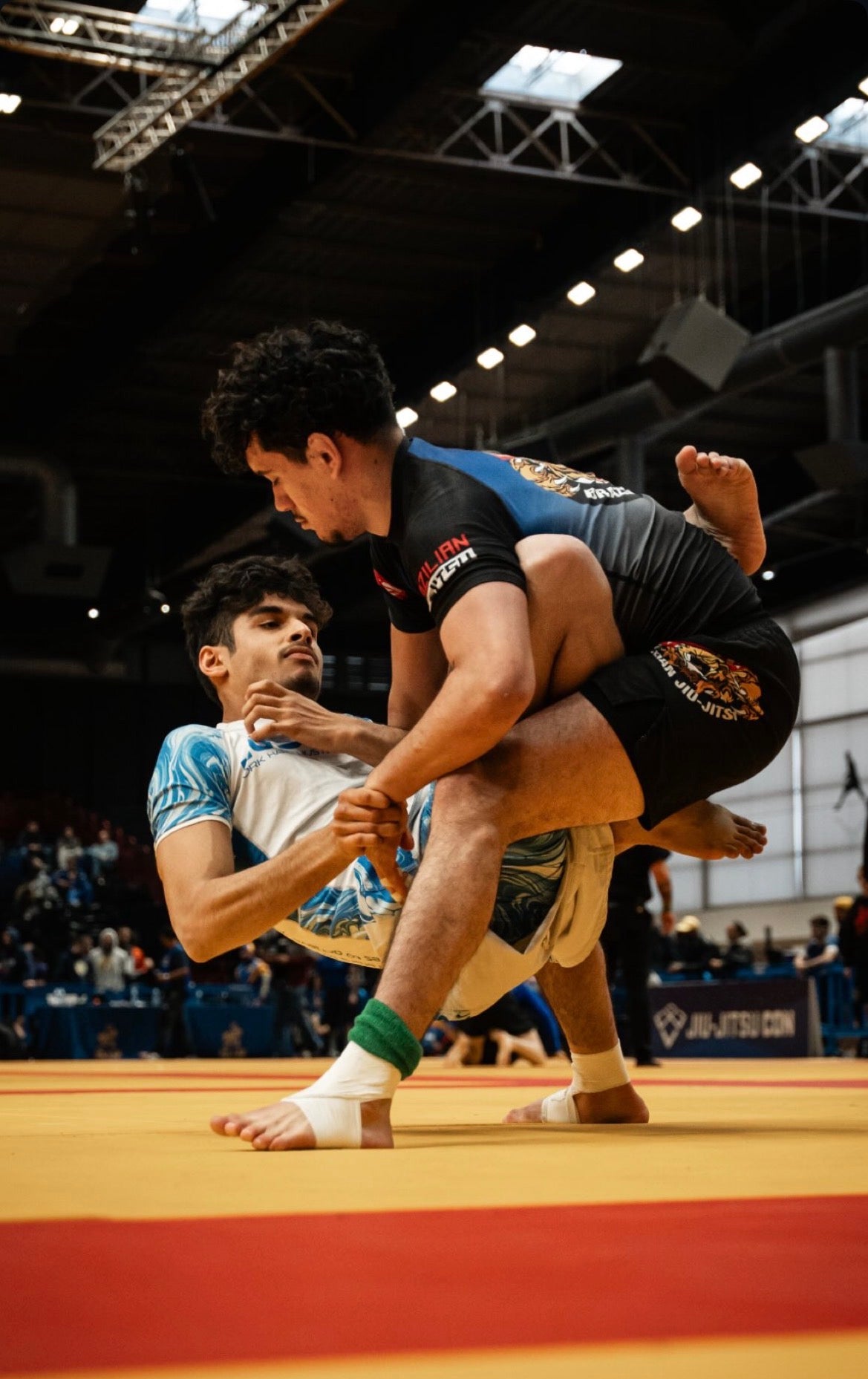
BJJ descends from judo and Japanese jujitsu via Mitsuyo Maeda, who transmitted his art to the Gracie family in Brazil at the beginning of the 20th century. The Gracies then developed a system centered almost exclusively on ground combat: guards, passes, sweeps, submissions. BJJ eliminated strikes and reduced the importance of throws to focus on pure grappling.
Here's a quick comparison of the three disciplines:
| Judo | Japanese Jujitsu | BJJ | |
|---|---|---|---|
| Main focus | Throws | Complete self-defense | Ground combat |
| Strikes | No | Yes | No |
| Ground work | Limited | Moderate | Central |
| Competition | Olympic (IJF) | Fighting/Duo system | IBJJF, ADCC |
| Attire | Judogi | Jujitsu kimono | Gi or no-gi |
| No-gi format | Rare | Rare | Very common |
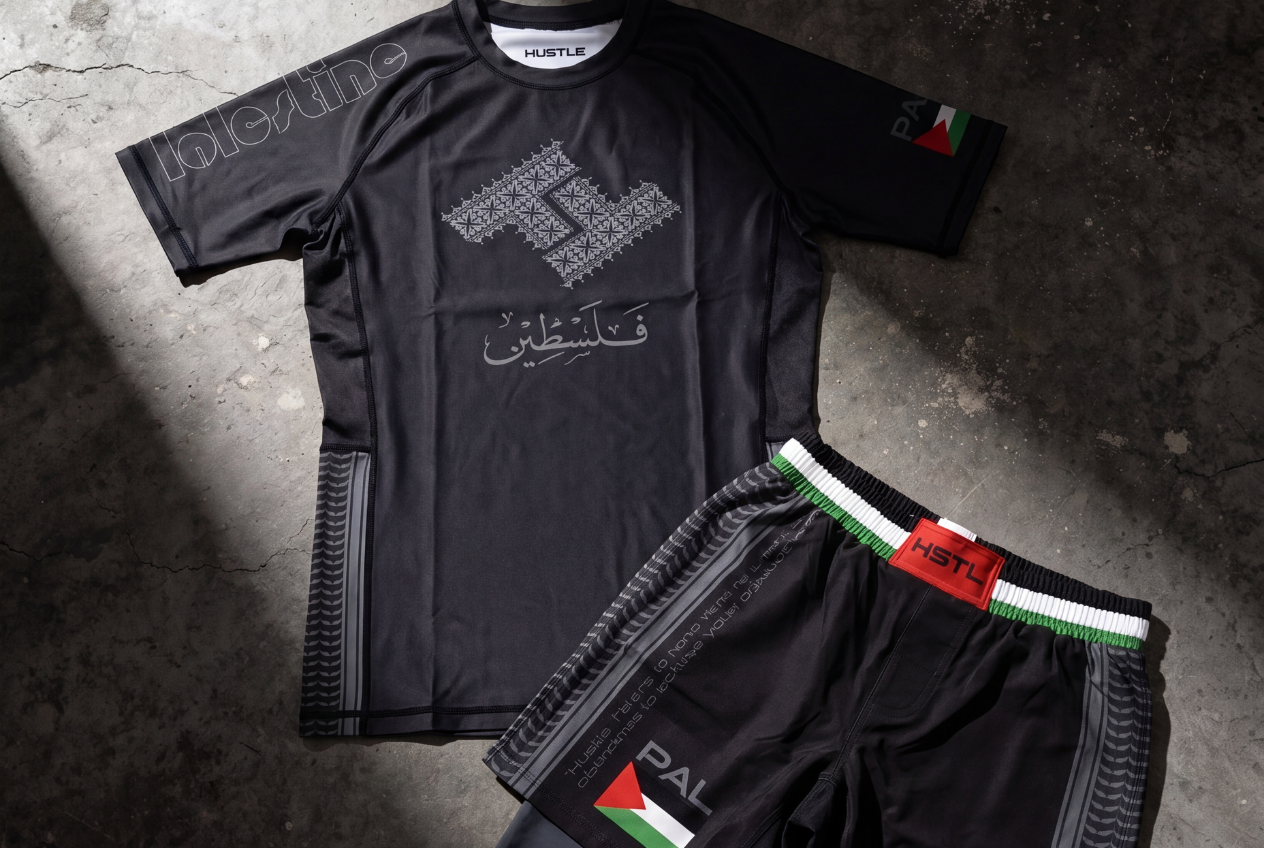
No-gi BJJ (without a kimono) is practiced in a rashguard and shorts—this is the format closest to pure grappling and is attracting more and more practitioners. A well-fitting BJJ compression rashguard protects the skin from mat friction and limits the risk of skin infections during sparring.
Judo or Jujitsu: Which to Choose Based on Your Goals?
The answer depends on what you're looking for.
- You want a structured competitive framework, an Olympic sport, and a dense network of clubs → judo is the logical choice. France is a land of judo, clubs are everywhere, and belt progression is highly regulated.
- You want a versatile self-defense approach, with strikes and ground work → Japanese jujitsu will give you a broader technical arsenal and a traditional martial dimension.
- You want to specialize in ground combat, grappling, and submissions → BJJ is your discipline. It's also the gateway to MMA for those who want to go in that direction.
- You want to try several approaches → nothing prevents you from combining them. A judo background is a considerable asset in BJJ (throws make a difference), and jujitsu complements both well.
The most important thing is to visit a club and try it out. All three disciplines welcome beginners, regardless of their initial physical condition.
Frequently Asked Questions
Is judo useful for BJJ?
Very much so. Judokas who take up BJJ have an immediate advantage in throws and ground control. Judo's ne-waza and BJJ's fundamentals largely overlap. The stand-up to ground transitions, grip management, and explosiveness developed in judo significantly accelerate progress in Brazilian Jiu-Jitsu.
Can you practice jujitsu and BJJ at the same time?
Yes, and it's even complementary. Jujitsu brings strikes and a self-defense vision that BJJ doesn't include, while BJJ offers a depth of ground technique that Japanese jujitsu doesn't reach at the same level. Many practitioners do both without scheduling conflicts.
What attire should you wear for no-gi jujitsu?
As for no-gi BJJ: a long-sleeved rashguard (which protects against mat burns and friction), shorts or spats without pockets or zippers, and a mouthguard for sparring. The essential thing is to wear fitted clothing that doesn't snag anything.
Do you practice BJJ, jujitsu, or no-gi grappling? Discover our BJJ rashguards — compression fit, fabric resistant to mat friction, designed by competitors to last training after training.
Read more

BJJ, Brazilian Jiu-Jitsu: a sport where 65 kg dominates 90 kg through pure technique. Origins, principles, gi vs no-gi, how to start in France — it's all here.

Rashguard too big, too tight—a bad fit ruins your workout. Chest measurement, size chart, mistakes to avoid: the complete guide to choosing the right size.