

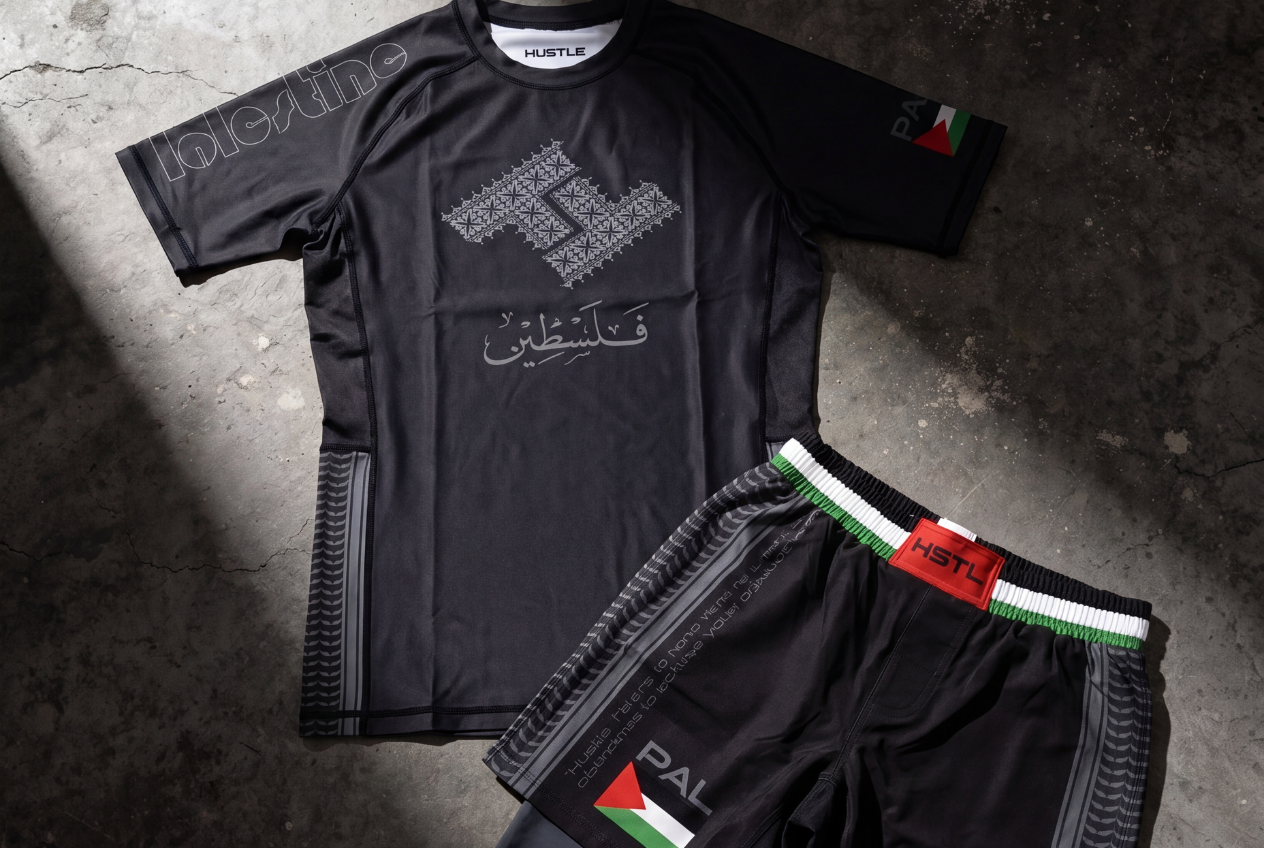
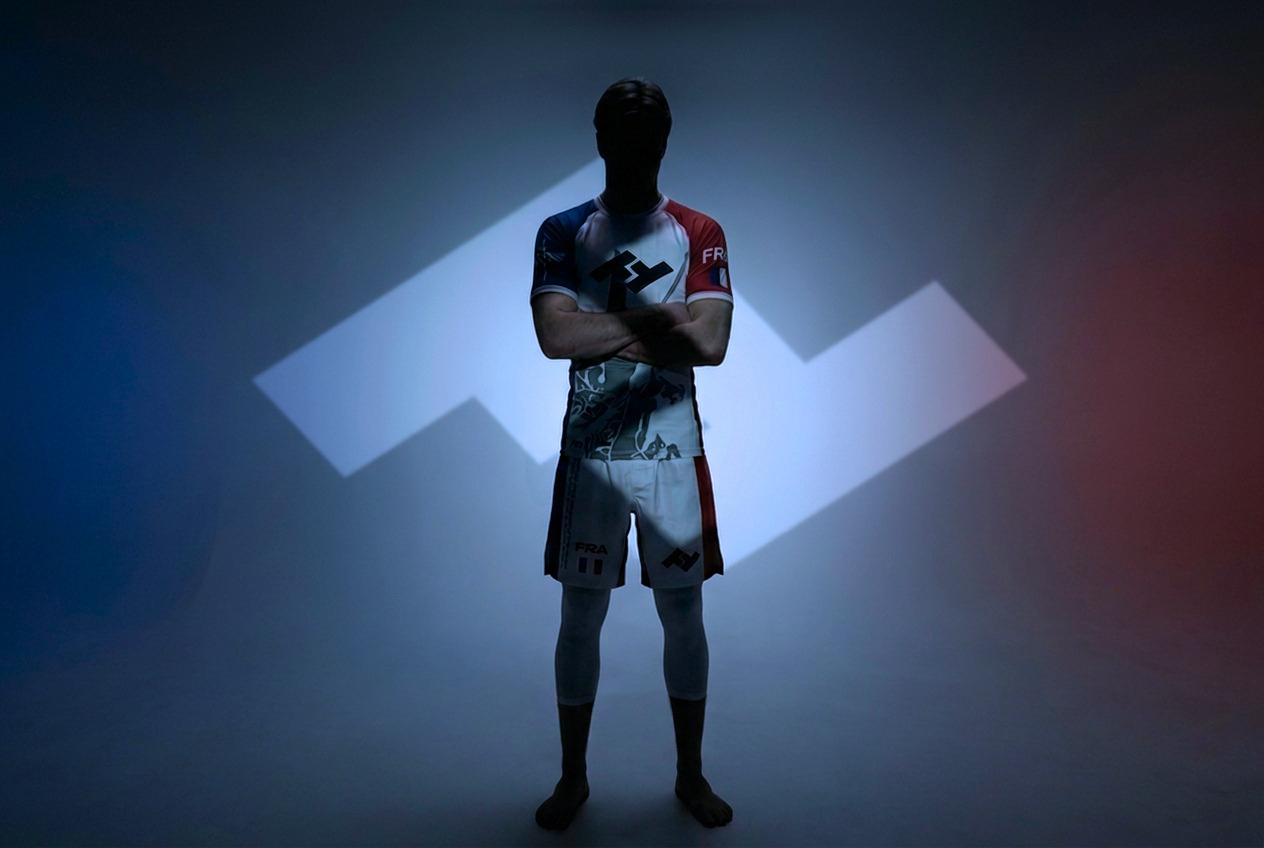


Difference between rashguard and compression shirt
Rashguard and compression shirt: two garments, two functions
If you practice BJJ, MMA, or grappling, you've probably already hesitated between a rashguard and a compression shirt. Visually similar, these two technical garments nevertheless meet very different needs. At Hustle Fightwear, we design both, and we know exactly what distinguishes them. Here's a clear comparison to help you choose the right gear.
Fabric composition: the first real difference
The rashguard is made from a thick polyester-elastane fabric, often between 220 and 280 g/m². Its weave is dense and resistant to repeated friction on the mats. It's a garment designed to withstand the friction of grappling without tearing or deforming.
The compression shirt, on the other hand, uses a thinner fabric, generally between 160 and 200 g/m². It relies on elasticity and compressive effect to support muscles during exertion. Its composition prioritizes comfort and muscle support over abrasion resistance.
Cut and fit: snug but not identical
Both garments are form-fitting, but their cut differs in the details. The rashguard has flatlock seams that reduce irritation during groundwork. Its collar is often higher to protect the neck from mat burns. Some models also include a silicone band at the bottom to prevent the garment from riding up during combat.
The compression shirt has a more classic cut, with a standard crew neck and sometimes raised seams. It's designed to be worn under another garment or alone during a weightlifting, running, or cross-training session. It doesn't need to withstand an opponent grappling with you.
Usage: combat sport vs. general fitness
This is where the distinction becomes essential. The rashguard is mandatory or highly recommended in many no-gi BJJ and grappling competitions. It protects the skin against infections (herpes, staph) by limiting direct skin-to-skin contact. For MMA, it also offers protection against cage burns.
The compression shirt is versatile. It's perfect for weight training, cardio, cross-training, or as a base layer in winter. Its compressive effect promotes blood circulation and can reduce muscle soreness after exercise. If you're looking for gym wear outside the mats, this is the ideal choice. Discover our complete collection of rashguards and compression shirts to find the model suitable for your practice.
Can one be used in place of the other?
Technically, yes—but it's not optimal. Wearing a compression shirt for grappling means risking tearing it in a few sessions. The fabric simply isn't made to withstand grips and ground friction. Conversely, a rashguard works very well for weight training, but its thicker fabric may be less comfortable for intense cardio sessions where breathability is key.
Our advice: if you practice a ground combat sport, invest in a real rashguard. If you mainly do weight training or fitness, a compression shirt will be more suitable. And if you do both? Get both. Also, check out our article on how to wear a rashguard to properly combine your gear.
Key takeaways
The rashguard and compression shirt share a form-fitting silhouette, but their differences are real: fabric resistance, seam type, skin protection, and primary use. The rashguard is the ally for ground combat sports, while the compression shirt excels in fitness and recovery. At Hustle Fightwear, both our ranges are designed with the same commitment to quality to support you in every discipline. If you're unsure about the size, our guide on what size to choose for a compression shirt will help you make the right choice.
Read more
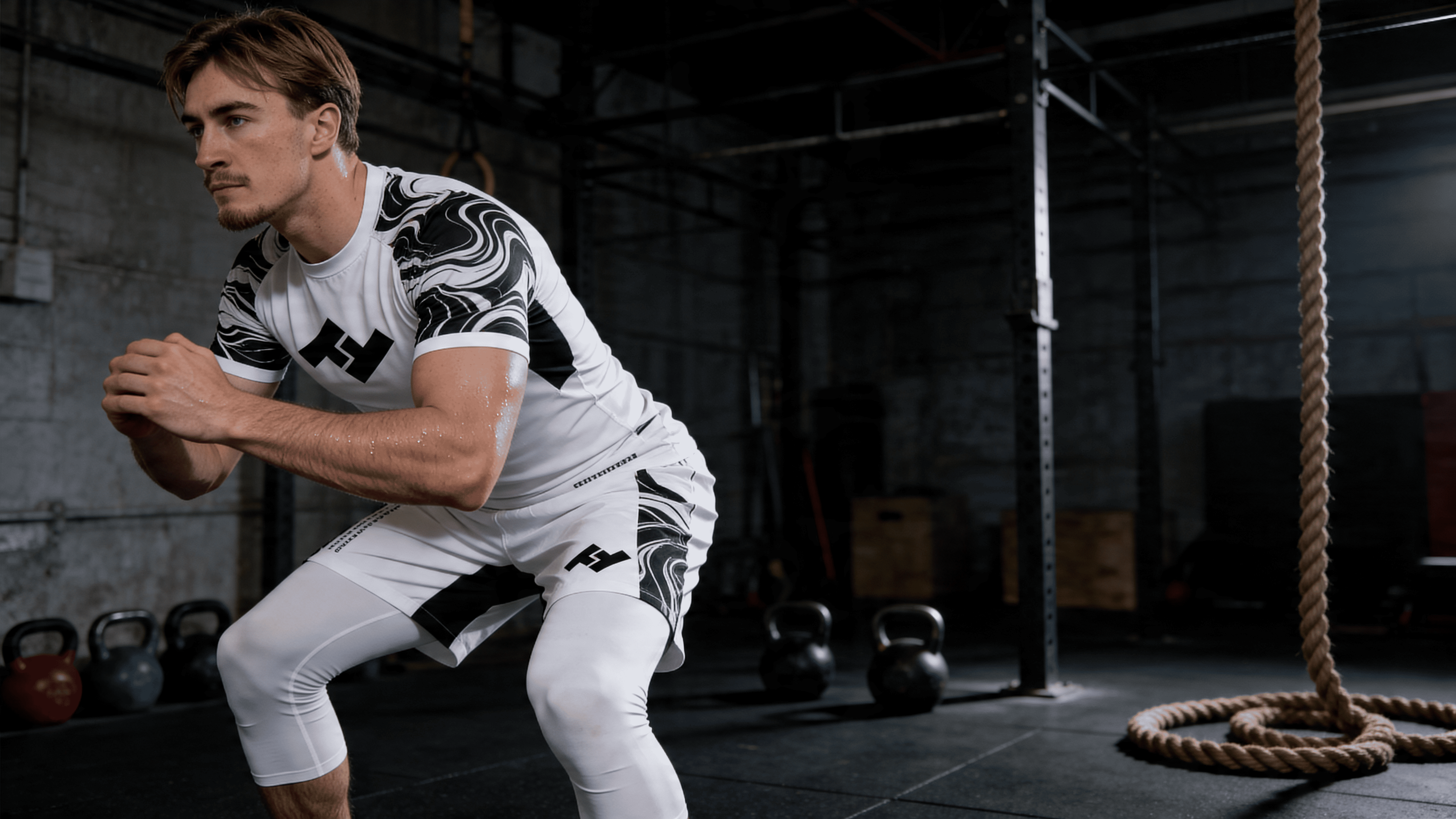
All the concrete benefits of the compression t-shirt for sport: muscle support, recovery and perspiration management.

Material, cut, size and closure: everything you need to know to choose the right MMA shorts for your practice.