



Compression shorts for grappling: for or against?
Compression shorts have been a staple in the sports world for several years. Running, bodybuilding, cycling: they're everywhere. But what about on the grappling and no-gi BJJ mats? Should you adopt them in addition to classic shorts, or are they a false friend? At Hustle Fightwear, we asked the real questions to the athletes we equip. Here's our honest verdict.
What exactly are compression shorts?
Compression shorts are close-fitting technical garments, usually made of polyester and elastane, that apply graduated pressure to the thigh muscles. Their main role is to support muscle mass during exertion, promote venous return, and limit parasitic vibrations during explosive movements.
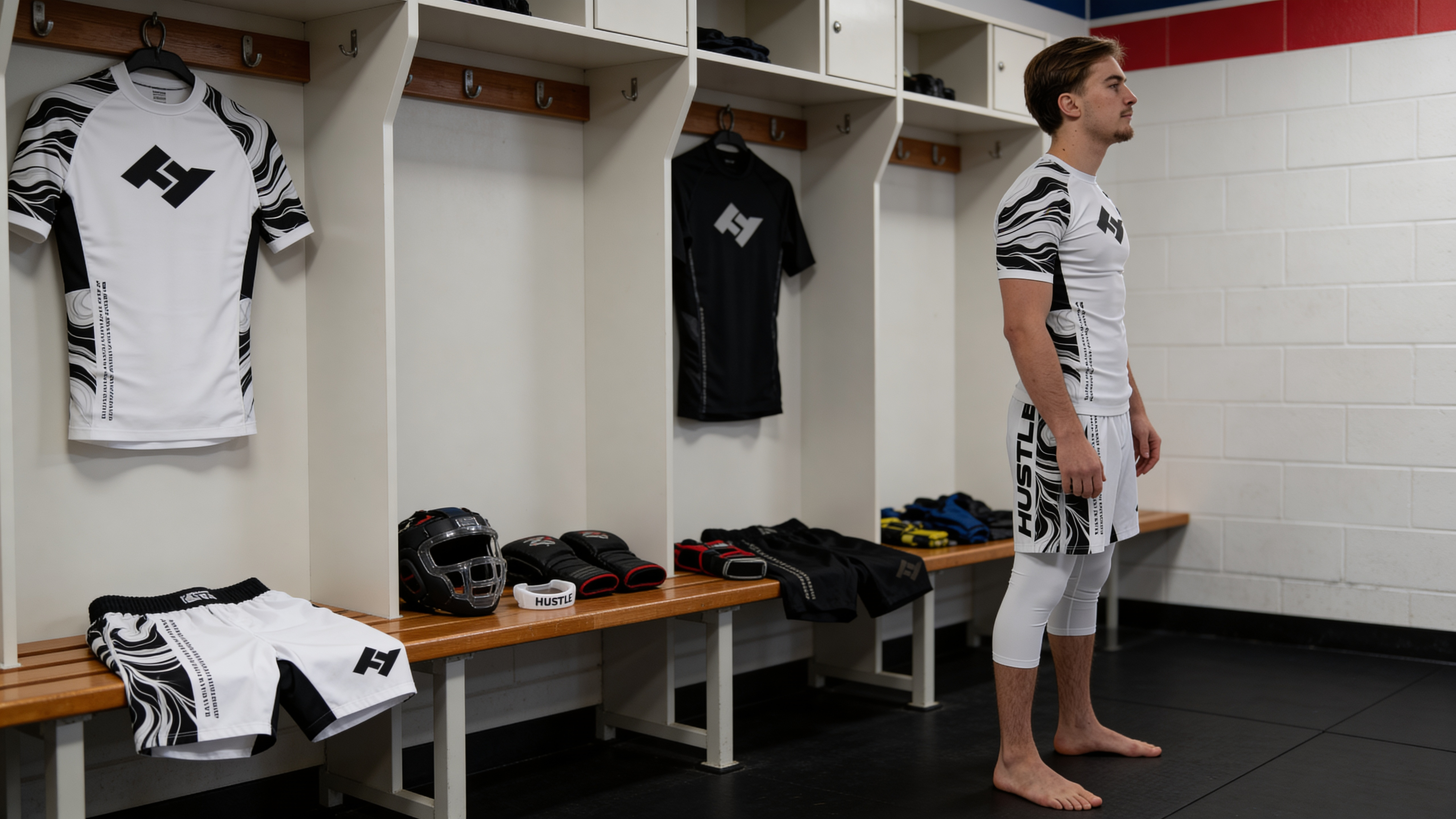
They are worn either alone, under fight shorts, or under a gi. Their close-fitting cut clearly distinguishes them from classic grappling shorts, which are looser to allow for movement and guard passes.
Arguments FOR compression shorts in grappling
First strong point: muscle support. In grappling and no-gi BJJ, the legs work a lot. Closed guard, triangles, sweeps, sprawls: the adductors and hamstrings are heavily used. Well-fitting compression shorts provide real support during long training sessions.
Second advantage: hygiene and modesty. Grappling involves many positions where the partner is very close to the groin. Wearing a compression layer under your shorts prevents any spillage and limits direct skin-on-skin contact, similar to a rashguard for the upper body.
Third argument: recovery. Studies on compression garments show a positive effect on blood circulation and the reduction of post-exertion muscle soreness. For a practitioner who trains 4 to 6 times a week, this is not negligible.
Limitations to be aware of before wearing them
Let's be honest: compression shorts also have their drawbacks in grappling. The first is grip. Shorts that are too smooth can facilitate opponent's guard passes, especially on hip controls. Some practitioners find that it makes it more difficult for them to establish guard.
Second point: heat. An extra layer of polyester under fight shorts also means more sweating. In summer or in a poorly ventilated room, discomfort can become a real hindrance.
Finally, in official competitions, certain federations (IBJJF, ADCC) impose strict rules on attire. Compression shorts are generally only allowed under official shorts, never alone. If you want to understand exactly what is allowed, we have written a complete guide on competition attire rules.
Our expert verdict from Hustle Fightwear
For us, the answer is nuanced: yes to compression shorts, but with discernment. They are an excellent complement to intense training, especially for practitioners who train frequently. In competition, they play their role under official grappling shorts.
However, they do not replace good fight shorts. They are an ally, not a universal solution. If you are new to grappling, focus first on the essentials: a quality gi or rashguard, appropriate no-gi shorts, and mouth protection. Compression shorts will come later.
How to choose good compression shorts for grappling?
Three criteria make the difference. First, the material: prefer a polyester-elastane blend with at least 15% elastane to ensure a true compressive effect. Next, the length: a model that reaches mid-thigh offers a good compromise between support and freedom of movement. Finally, the seams: flatlock seams prevent irritation in friction areas.
Avoid ultra-cheap models: low-end compression shorts lose their elasticity after a few washes and end up loose. It's better to invest in a durable item. For the upper body, the same logic applies: we detailed all this in our article on the benefits of compression shirts for sports.
Conclusion: it's up to you to test
Compression shorts are neither a gadget nor a revolution. They are a tool. Used well, they can improve your comfort during long sessions and aid your recovery. Chosen poorly, they become a nuisance.
At Hustle Fightwear, we develop equipment designed by fighters for fighters. Our rashguard collection follows this logic: technical materials, studied cuts, durability. Whether you are a competitor or a recreational practitioner, equip yourself with gear that matches your commitment on the mats.
Read more
Are you new to grappling or looking to upgrade your gear? Here's the complete guide to outfitting yourself smartly without breaking the bank.

The official rules for white belt rashguards in no-gi competition: authorized colors, length, material, and mistakes to avoid to prevent disqualification at weigh-ins.