

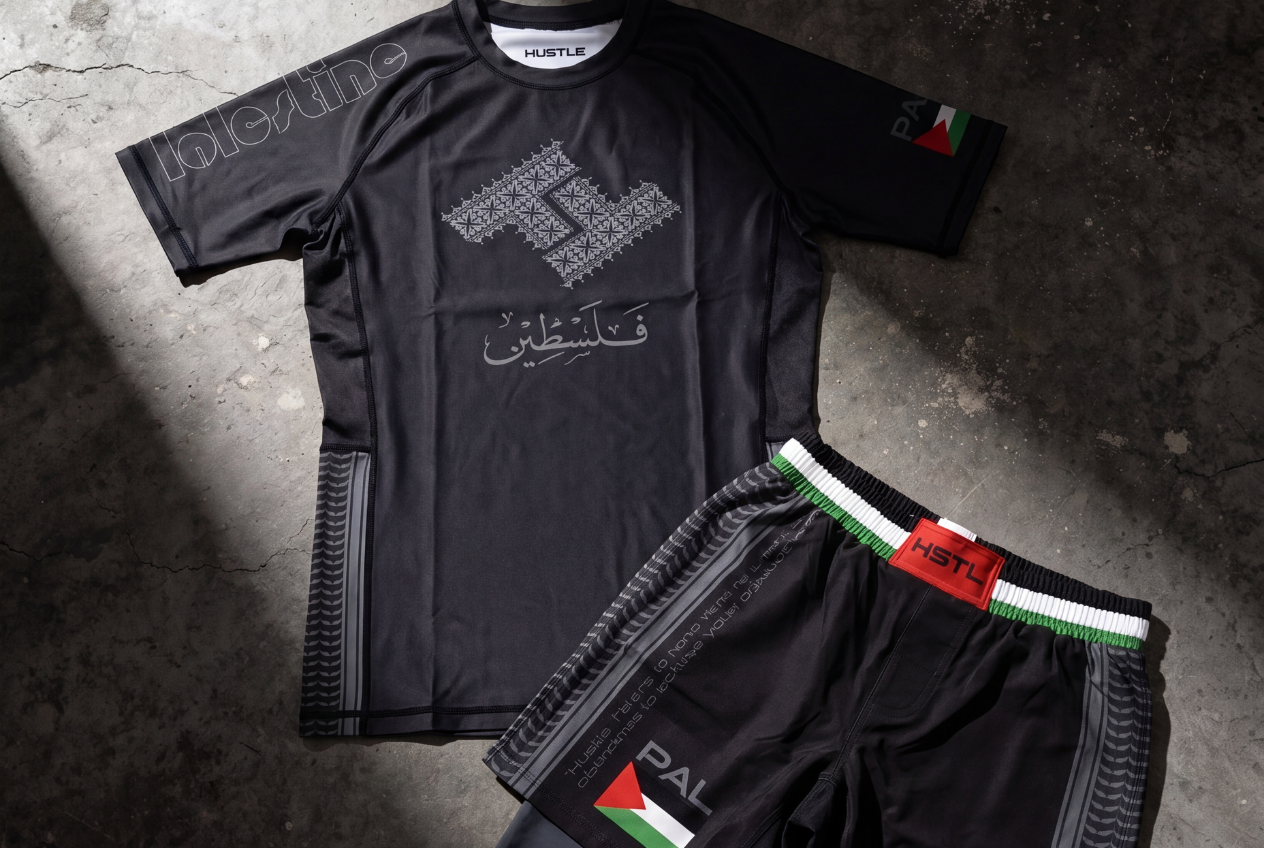



MMA shorts vs boxing shorts: what's the difference?
At first glance, MMA shorts and boxing shorts may look similar. However, as soon as you step into the ring or the cage, the differences become obvious. Each pair of shorts has been designed for a specific discipline, with its technical constraints and specific movements. Choosing the wrong pair means risking discomfort, hindrance during movement, or even non-compliance in competition. At Hustle Fightwear, we regularly receive the question: can I do MMA in boxing shorts? The short answer is no, and here's why.
The cut: adapted to each fighting style
Boxing shorts have a loose, long cut, often above the knee or mid-thigh. They are designed to offer great freedom of movement in the legs, especially for lateral movements, dodges, and footwork typical of the noble art. The waist is generally high, often at navel level, with a wide elastic waistband that keeps the shorts firmly in place during exchanges.
Conversely, MMA shorts have a much more fitted and shorter cut. They stop mid-thigh to avoid hindering high kicks, scissors, or ground transitions. The cut is close to the body to prevent the opponent from grabbing them during a clinch, a back take, or on the ground.
Length: a major technical issue
In boxing, the length of the shorts is not a problem: the legs are only used for movement. Long, even very long, shorts are even sought after for their visual style and tradition. In MMA, it's the opposite. Shorts that are too long can get caught during a guard pass, hinder a knee strike, or simply give the opponent a grip. Federations like the IBJJF or MMA organizations have also set maximum lengths for competitions.
Material: resistance vs. lightness
Boxing shorts are generally made of satin or lightweight polyester. The objective is lightness, fluidity, and breathability during all 12 rounds. They are designed for intense cardio, not for resisting friction on the ground.
MMA shorts, on the other hand, are designed to take a beating. High-density polyester, reinforced seams, 4-way stretch fabric: they must resist friction on the mat, grappling, and submissions like kimuras or omoplatas that put enormous stress on the seams. Some models even incorporate Lycra side panels to increase elasticity and freedom of movement without compromising durability.
Closure and waistband: two different logics
Boxing shorts almost always have a wide elastic waistband with no visible drawstring. The objective: to avoid any risk of injury if the opponent touches the abdominal area. No laces, no velcro, no hard elements.
MMA shorts use a combination of an elastic waistband + an internal drawstring + often a Velcro system at the waist. This triple security is essential because in MMA, pulls on the shorts are frequent during clinches, sprawls, or takedown attempts. Shorts that slip mean a spoiled fight.
Pockets, vents, and technical details
MMA shorts often incorporate side vents to allow for high kicks and flying knees. Some high-end models also have an anti-perspiration finish or an antibacterial treatment, essential when training back-to-back. Boxing shorts, on the other hand, generally have no vents: the discipline does not need them.
So, which shorts to choose?
The right approach: one pair of shorts per discipline. If you do MMA, grappling, or no-gi BJJ, choose MMA shorts designed for ground combat. If you box or kickbox, opt for specific shorts. And if you practice both? Two pairs of shorts in your bag is the simplest and most reliable solution. To further enhance your equipment, you can also consult our complete guide to choosing your MMA shorts.
At Hustle Fightwear, each pair of shorts has been tested by our ambassador athletes in real training and competition conditions. We don't include anything in the collection that doesn't pass the intense sparring test.
Read more
The complete guide to choosing a rash guard suitable for BJJ and grappling: fabric, fit, seams, durability, and competition approval.

You're seeing more and more bodybuilders wearing compression shirts at the gym. Fashion trend or real added value? Let's take a look at the real benefits and limitations.