


BJJ Rash Guard: The complete guide to choosing the right one in 2026
What is a BJJ rashguard?
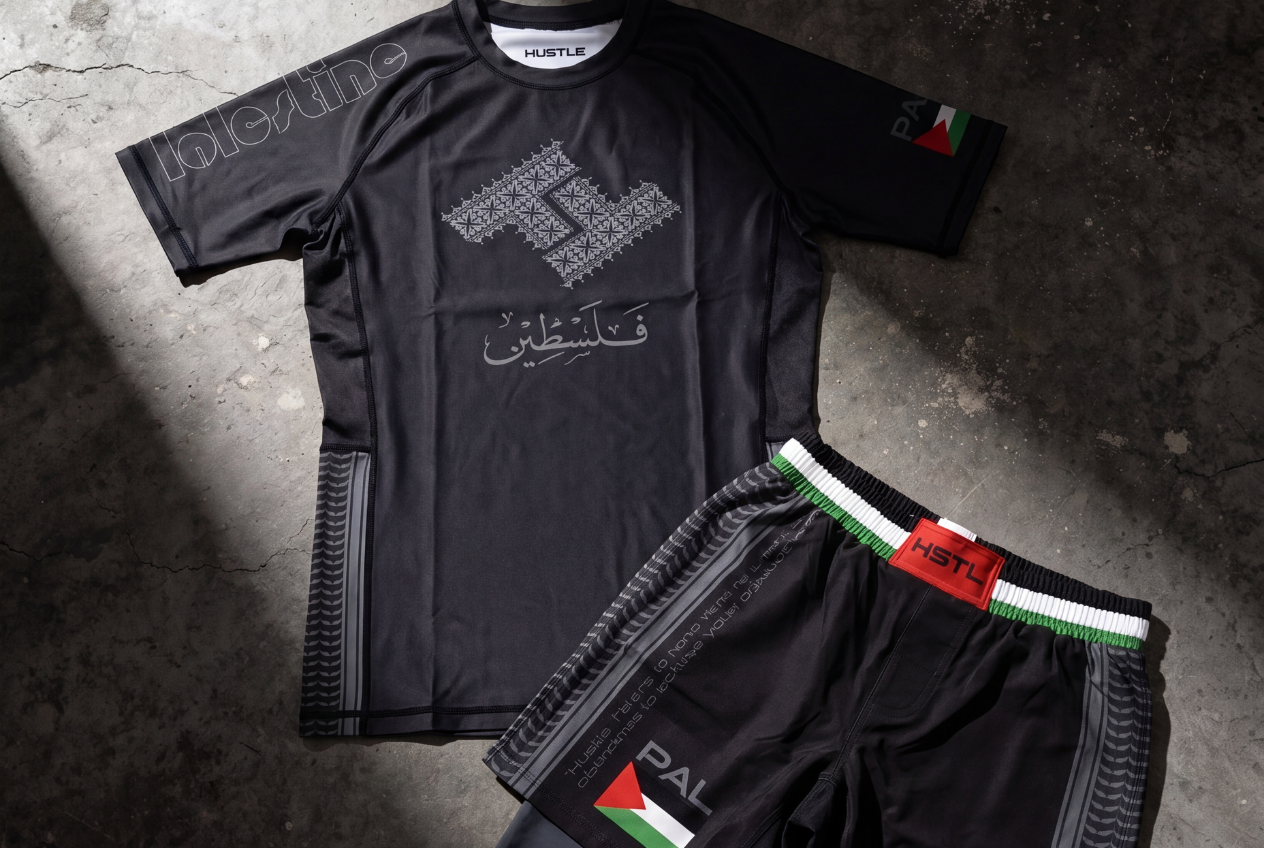
A BJJ rashguard is a form-fitting technical shirt designed specifically for no-gi Brazilian Jiu-Jitsu. Unlike a simple sports T-shirt, it is made of an elastic fabric that stays close to the skin during rolling, prevents mat burns, and limits the proliferation of bacteria.
In no-gi competition, the rashguard is mandatory under CFJJB and IBJJF regulations. It's the central piece of your fight gear — and choosing the right model can make a real difference between a comfortable training session and a rashguard that rides up, slips, or tears after 3 months.
The 7 criteria for choosing a BJJ rashguard
1. Fabric and compression
A good BJJ rashguard uses a polyester/elastane blend (usually 80/20 or 85/15). Polyester ensures durability and quick drying, while elastane provides the compression effect that keeps the rashguard in place during scrambles and guard passes.
Avoid 100% polyester rashguards without elastane: they don't have the second-skin effect and ride up as soon as an opponent grabs your back.
2. Seams
Flatlock seams (flat seams) are the standard for BJJ. They reduce friction against the skin and are more resistant to repeated pulling. Classic overlock seams will cause irritation after a few rolls, especially under the armpits and along the sides.
3. Cut and length
The rashguard must be long enough to stay inside the shorts during the fight. This is also a requirement of the CFJJB no-gi regulations: the rashguard must cover the waist of the shorts.
The cut should be fitted without being too tight. A rashguard that is too tight limits range of motion. A rashguard that is too loose gives your opponent grips — exactly what you want to avoid in no-gi.
4. Long or short sleeves?
In CFJJB and IBJJF competition, both are allowed. Long sleeves offer better protection against mat burns and skin infections. Short sleeves offer more freedom and less heat.
The majority of no-gi competitors opt for long sleeves. This is the choice of our ambassador athletes Mougoutdine Akaimov (double European champion, 7x French champion) and Malik Abduragimov.
5. The anti-slip band
This is the detail that makes the difference between a generic sports rashguard and a true competition rashguard. The silicone anti-slip band at the waist prevents the rashguard from riding up during rolls.
Without this band, you'll spend your time readjusting your rashguard between each exchange. The Hustle Fightwear Competitor V2 includes this band as standard — it's one of the reasons why hundreds of athletes wear it in CFJJB and IBJJF competitions.
6. Competition approval
If you plan to compete, your rashguard must comply with strict color rules:
- White belt: predominantly white rashguard (50% minimum), only secondary color allowed = black
- Blue to brown belts: black, white or black/white with a minimum of 10% of your belt color
- Black belt: predominantly black (50% minimum), secondary color = white, red limited
For detailed rules by belt, consult our series of articles on no-gi regulations by belt.
7. Durability
A BJJ rashguard is subjected to extreme stress: pulling, friction on the mat, frequent washing. A good model should last at least 12-18 months of intensive training (3-5 sessions per week).
Durability depends on the quality of the fabric, seams, and maintenance. Wash your rashguard at 30°C without fabric softener and never tumble dry it to preserve its properties.
BJJ rashguard vs compression shirt
A compression shirt is designed for fitness and weight training. It offers muscle support but is not designed for grappling sports. A BJJ rashguard has reinforced seams, a fabric resistant to grabbing, and a cut that stays in place during ground transitions.
For full details, consult our rashguard vs compression shirt comparison.
Why the Competitor V2 is the benchmark rashguard in competition
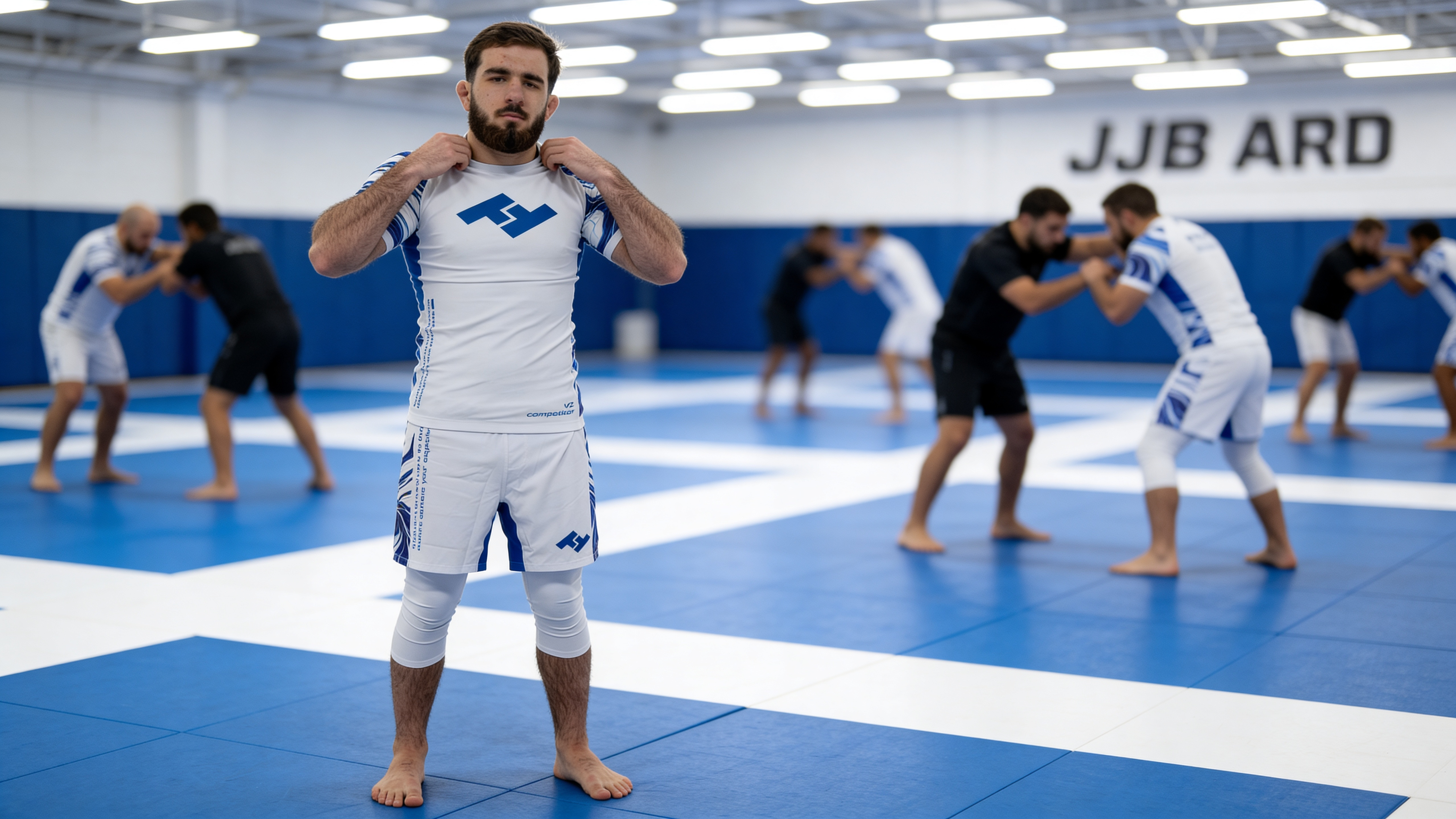
The Hustle Fightwear Competitor V2 set was designed by competitors for competitors. Every technical detail meets a real need on the mat:
- Integrated anti-slip band: the rashguard does not ride up during the fight
- Breathable material under the armpits: targeted ventilation for prolonged efforts
- Side openings on the shorts: maximum range of motion for kicks, guard, and scrambles
- Integrated leggings: knee protection without separate spats
- CFJJB and IBJJF approved: you won't be disqualified at weigh-ins
Worn by Mougoutdine Akaimov and Malik Abduragimov, validated by thousands of fighters. Discover the Competitor V2 collection.
FAQ — BJJ Rashguard
Is a rashguard mandatory in BJJ?
In no-gi, yes. CFJJB and IBJJF regulations require wearing a rashguard in no-gi competition. For training, it is highly recommended for hygiene and skin protection.
What size rashguard should I choose?
Take your usual clothing size. The rashguard should be fitted without compressing. If in doubt between two sizes, take the larger one. Consult our rashguard size guide.
How much does a good BJJ rashguard cost?
Between €40 and €80 for a competition-quality rashguard. Below €30, durability and finishes are often insufficient. The Competitor V2 set offers unbeatable value for money for competition.
Can you wear a rashguard under a gi?
Yes, many practitioners wear a rashguard under their BJJ kimono for comfort and hygiene. It is allowed in gi competition. Consult our article what to wear under a BJJ kimono.
What color rashguard for competition?
The color depends on your belt. For white belts, predominantly white. From blue belt, black, white, or black/white with 10% of your belt color. For black belts, predominantly black.
Read more
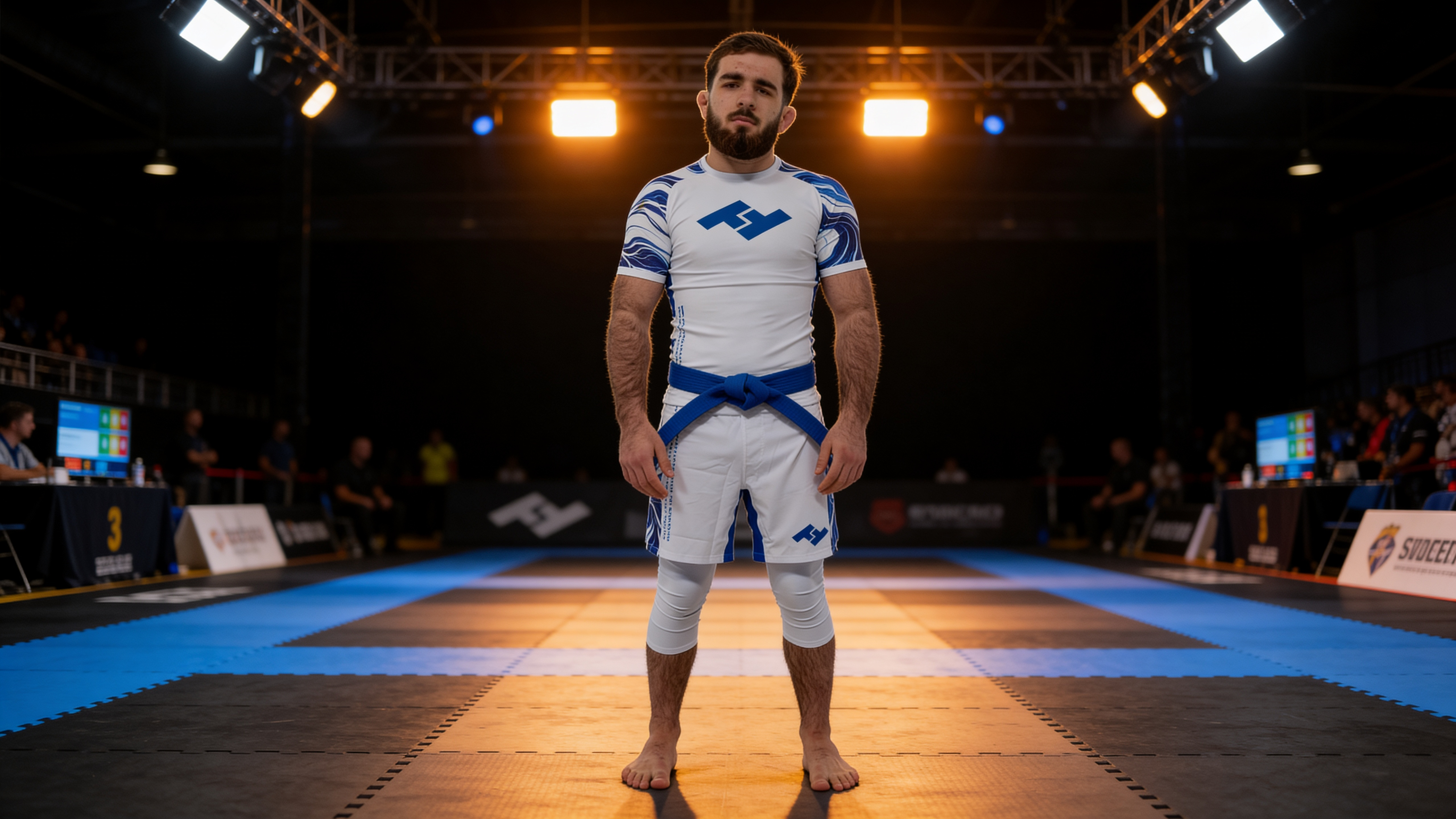
The complete guide to blue belt rashguard regulations in no-gi competition: authorized color percentages, cut, length, and CFJJB and IBJJF approved attire.
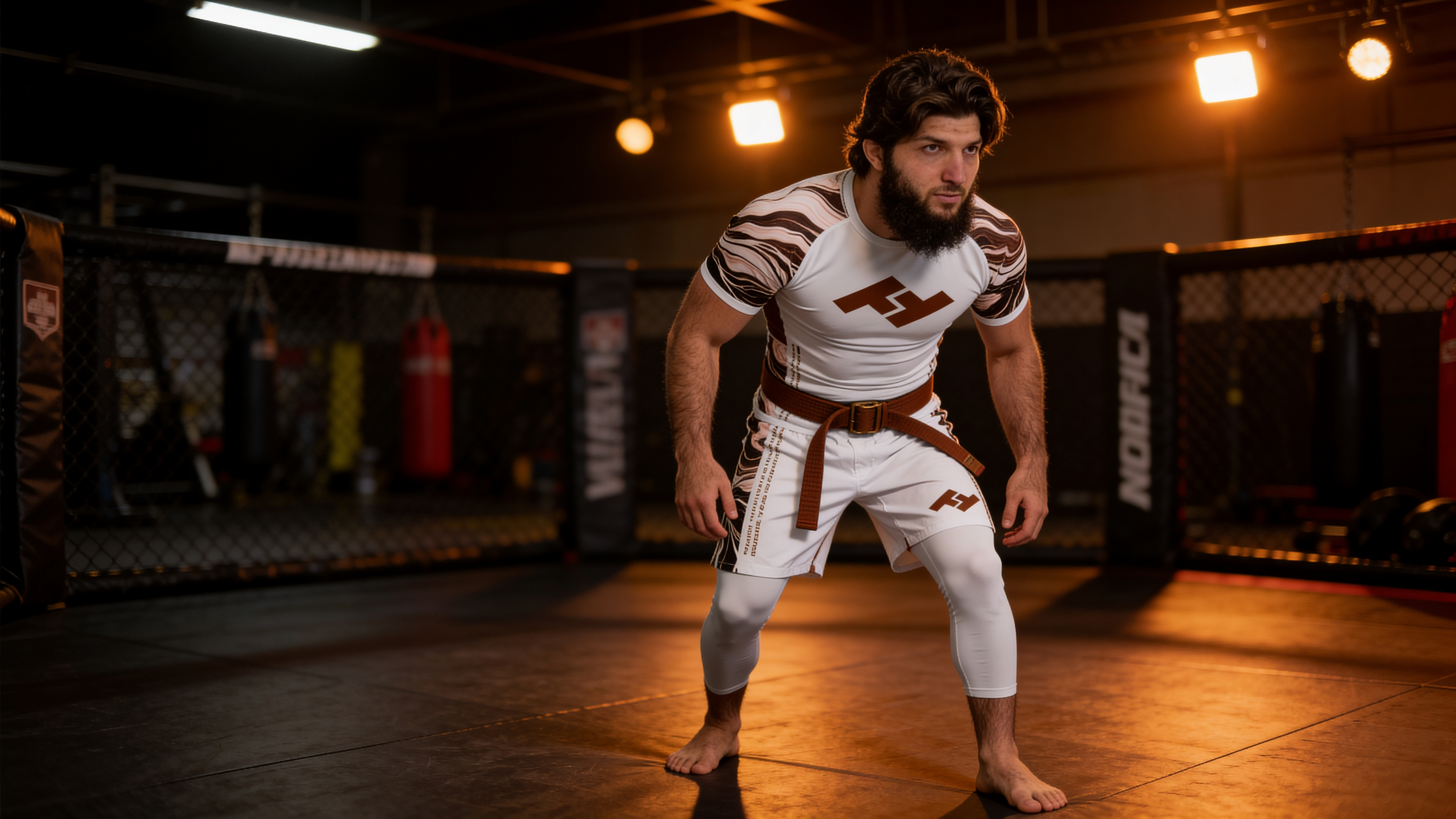
The complete guide to brown belt rashguard regulations in no-gi competition: authorized colors, cut, length, and approved CFJJB and IBJJF sets.